The Photo You Hid From Everyone Might Be the Truest Thing You've Ever Shot
There's a folder on your phone — or maybe buried deep in a hard drive somewhere — full of photos you took of yourself and immediately decided no one would ever see. Too tired. Too raw. The angle was wrong, the light was unflattering, your eyes looked sad in a way you didn't feel like explaining. You hit delete, or you didn't, but either way those images have been living in the dark ever since.
Here's an uncomfortable question worth sitting with: what if those are the best self-portraits you've ever made?
The Curation Spiral and Where It Takes You
We've built an entire visual culture around the idea that the images we share should represent our best selves. Best lighting, best angle, best mood, best moment. That impulse isn't new — people have been commissioning flattering portraits for centuries — but the speed and volume at which we now produce and discard self-images has created something psychologically different. We're not just choosing a good picture anymore. We're constructing a character.
Dr. Renee Engeln, a psychology professor and body image researcher, has written extensively about what she calls "appearance conversations" — the constant internal dialogue we have about how we look and how we're being perceived. When that dialogue gets attached to a camera and a posting workflow, it can become almost compulsive. You take thirty photos to find one that feels acceptable. You run it through three editing apps. You still almost don't post it. And even after you do, you're watching the response, adjusting your understanding of yourself based on external feedback.
The result, over time, is a kind of visual estrangement from your own face. You become less able to recognize yourself in images that haven't been processed through that approval loop.
What Portrait Photographers Actually See
Talk to working portrait photographers long enough and a pattern emerges: the shots their subjects love most are rarely the ones those subjects would have chosen themselves.
"People come in wanting to look a certain way," says one New York-based portrait photographer who has spent over a decade shooting editorial and personal work. "They have a version of themselves in their head. And my job, honestly, is to get them past that version. The interesting stuff happens when they stop performing."
That moment — the one where the subject stops performing — is something portrait photographers actively chase. It often comes after the subject thinks the shoot is over. They relax their jaw, let their eyes go soft, stop holding their shoulders in that particular way. And the camera catches something real.
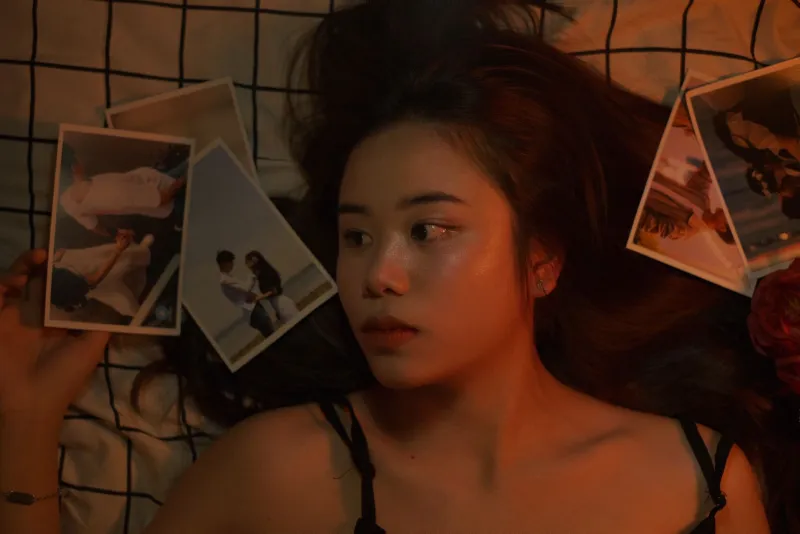
The same principle applies when you're shooting yourself. The self-portraits taken in genuine moments — not staged ones — carry a weight that carefully composed shots often don't. A photo of yourself crying after something difficult. A shot taken at 6 a.m. before you've assembled the day's presentation of yourself. A picture where your hair is a mess and you look exactly your age and something behind your eyes is completely unguarded.
Those images make people feel something. Usually because they recognize something in them.
The Vulnerability Equation
Brené Brown's work on vulnerability has become so widely referenced it's almost a cliché at this point, but the core idea translates directly to visual storytelling: the things we're most afraid to show are often the things that connect us most deeply to other people.
In photography, that connection is visceral. When you look at a portrait and feel genuinely moved, it's almost never because the subject looked perfect. It's because something in the image felt true. A slight asymmetry in the expression. Eyes that are doing something complicated. A posture that suggests history.
Perfection in portraiture tends to create distance. We admire it the way we admire an expensive car — from the outside, with appreciation but without feeling particularly seen by it.
Imperfection, on the other hand, creates proximity. It says: I was here, and I was real, and I let you see it.
Why We Keep Hiding Anyway
Knowing all of this doesn't make it easy to post the unfiltered version of yourself. The fear is real and it's layered. There's the social fear — what will people think? There's the professional anxiety — does this affect how I'm perceived? And underneath both of those, there's something older and harder to name: a deep discomfort with being fully witnessed.
We live in a culture that rewards polish. LinkedIn rewards professional headshots. Instagram rewards the aesthetically coherent feed. Dating apps reward the best possible version of your face. Every platform has built implicit rules about what kind of self-presentation is acceptable, and raw vulnerability rarely makes the cut.
But visual artists — particularly those working in self-portraiture as a deliberate practice — have been pushing back against that for decades. Nan Goldin's intimate, unflinching photographs of herself and her community in the 1970s and 80s remain some of the most emotionally powerful images in contemporary photography precisely because they refused to look away from difficulty. Francesca Woodman's self-portraits, shot largely in her late teens and early twenties, carry an almost unbearable emotional transparency. Neither photographer was interested in looking good. They were interested in looking true.
Starting Small: A Different Approach to Self-Portraiture
You don't have to post anything. That's actually the first and most important piece of this.
The practice of taking honest self-portraits — ones where you're not performing, not optimizing, not preparing for an audience — is valuable completely independent of whether anyone ever sees them. Think of it as a visual journal. A private record of what you actually looked like when you were going through something. When you were happy in an unself-conscious way. When you were forty-three and tired and somehow still completely yourself.
Some photographers set aside a regular time to do this kind of shooting. No specific goal, no particular aesthetic intention. Just a camera and whatever version of themselves showed up that day.
Over months and years, those collections become something remarkable. A genuine visual autobiography, not a highlight reel.
And occasionally — not always, but occasionally — one of those images turns out to be so honest and so unexpectedly beautiful that sharing it feels less like risk and more like relief.
The Picture Worth Keeping
The photos we curate tell people what we want them to know. The photos we hide tell us what we actually know about ourselves.
Both kinds have value. But if your entire visual self-representation lives in the curated column, something important is getting lost — not just for the people who might have connected with the real version, but for you. Because there is something grounding about looking at an honest image of yourself and recognizing it. About saying: yes, that's me. Not the best me, not the most optimized me, but me.
That recognition is worth more than a hundred likes on a perfectly lit selfie.
So dig up the folder. Look at what's in it. You might be surprised by what you find.