From Accidents to Icons: The Unlikely Origins of Photography's Most Distinctive Voices

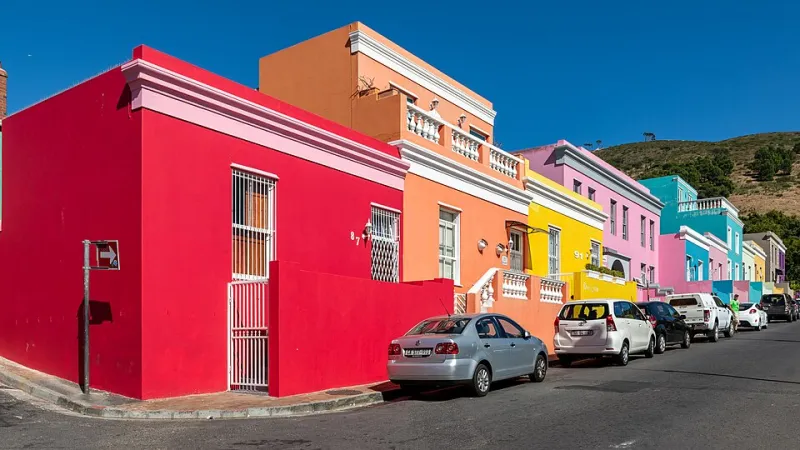
Photo: Jugraj Singh Sehri, CC BY-SA 4.0, via Wikimedia Commons
There's a version of the artist origin story we love to tell — the one where a visionary picks up a camera, sees the world differently from day one, and quietly ascends to greatness. Clean. Linear. Inspiring.
Reality is almost never that tidy.
The photographers whose work hangs in galleries, fills museum retrospectives, and gets pinned on mood boards by creatives across the country? Most of them stumbled. They copied the wrong people, chased trends that didn't suit them, or had a single weird afternoon that changed everything. That messiness isn't a footnote to their story — it is the story.
Here's a look at how a few of photography's most celebrated figures actually found their voice.
Henri Cartier-Bresson: The Painter Who Learned to Let Go
Before Henri Cartier-Bresson became synonymous with the phrase "the decisive moment," he was a painter. Trained in the fine arts in Paris, he came to photography almost sideways — and that detour shaped everything.
Cartier-Bresson has spoken about the influence of Surrealism on his early sensibility. He wasn't trying to document the world so much as catch it off-guard, the way a dream image surprises you before logic has a chance to intervene. His years studying painting gave him an almost instinctive feel for geometric composition, but it was his willingness to abandon the controlled environment of a studio that unlocked his style.
His early travels to West Africa in the late 1920s — where he got seriously ill and spent time confronting his own mortality — pushed him toward an urgency that never left his work. He started shooting with a small 35mm Leica, partly because it was light and unobtrusive. That practical choice became a philosophical one: get close, stay invisible, wait.
The lesson here isn't just about gear or technique. It's about what happens when your past training collides with a completely different environment. The friction is where the style lives.
Annie Leibovitz: The Accidental Rolling Stone
Annie Leibovitz enrolled at the San Francisco Art Institute in the late 1960s intending to study painting. She picked up photography almost on a whim after taking a night class, and within a couple of years she was shooting for Rolling Stone — a magazine that was itself still figuring out what it wanted to be.
What defined Leibovitz's early style wasn't technical mastery. It was access and intimacy. She traveled with the bands she photographed, which meant she caught moments most photographers never got near. Her famous 1971 cover of John Lennon wasn't the product of a polished studio setup — it came from a relationship built over time.
But Leibovitz has also been candid about the role of failure in her development. Early in her career, she over-relied on the energy of her subjects, letting their charisma do the heavy lifting. It took years of working with editors and, later, the influence of conceptual artists, to push her toward the more theatrical, narrative-driven portraits she became known for in the 1980s and beyond.
Her style didn't emerge from a single breakthrough. It was layered on slowly, one assignment at a time, shaped as much by criticism as by praise.
Vivian Maier: A Style No One Knew Existed
No conversation about photographic identity is complete without acknowledging how strange the concept gets when applied to Vivian Maier — the Chicago nanny whose roughly 150,000 negatives sat undeveloped and unseen until after her death.
Maier never pursued recognition. She shot compulsively, developed some of her work in private, and kept almost all of it to herself. When her archive was discovered and eventually published, critics were stunned by the consistency and sophistication of her eye — a gritty, humanist street photography style that would have put her comfortably alongside the greats of her era.
Her story raises a genuinely uncomfortable question: is a photographic voice something you develop for an audience, or does it exist independent of one? Maier's case suggests the latter. Style, it turns out, might be less about external validation and more about the private, repeated act of deciding what's worth pointing a camera at.
Contemporary Creators: Finding a Voice in the Age of the Algorithm
For today's digital photographers and visual artists, the path to a recognizable style runs through a completely different landscape. Social media has compressed the feedback loop dramatically — you can post a photo and know within hours whether it resonates.
That's both a gift and a trap.
Many contemporary photographers talk about the early stage of their career as a period of mimicry. You find someone whose work you love, and you spend months trying to recreate what they do. Eventually — if you're paying attention — you start noticing the moments where your instincts diverge from your influences. Those divergences are the seeds of something original.
Portland-based documentary photographer and educator Jessica Ingram has described her style as something that emerged despite her training rather than because of it. Her MFA program pushed her toward formal, highly composed work. Her actual voice turned out to live in the looser, more spontaneous images she was shooting on the side — work she almost didn't show anyone because it felt "too personal."
That tension between what you're supposed to make and what you actually want to make is where most photographers find their footing.
What All These Stories Have in Common
Pull back far enough and a pattern starts to emerge. Cartier-Bresson's style came from the collision of fine art training and raw, unpredictable street life. Leibovitz's evolved through access, criticism, and slow accumulation. Maier's existed entirely outside the usual feedback systems. Contemporary photographers are navigating algorithm pressure while trying to hear their own instincts underneath the noise.
In every case, the style didn't arrive fully formed. It was built out of wrong turns, borrowed influences that eventually got discarded, and a willingness to keep shooting even when the work wasn't there yet.
If you're somewhere in that process right now — trying to figure out what your pictures actually look like when you stop trying to make them look like someone else's — you're not behind. You're exactly where everyone who ever developed a real voice had to be at some point.
The frame doesn't tell the whole story. Neither does the finished print. The interesting part is almost always what happened before the shutter clicked.