Smooth Is Not Beautiful: How AI Photo Processing Is Erasing the Soul of Your Images

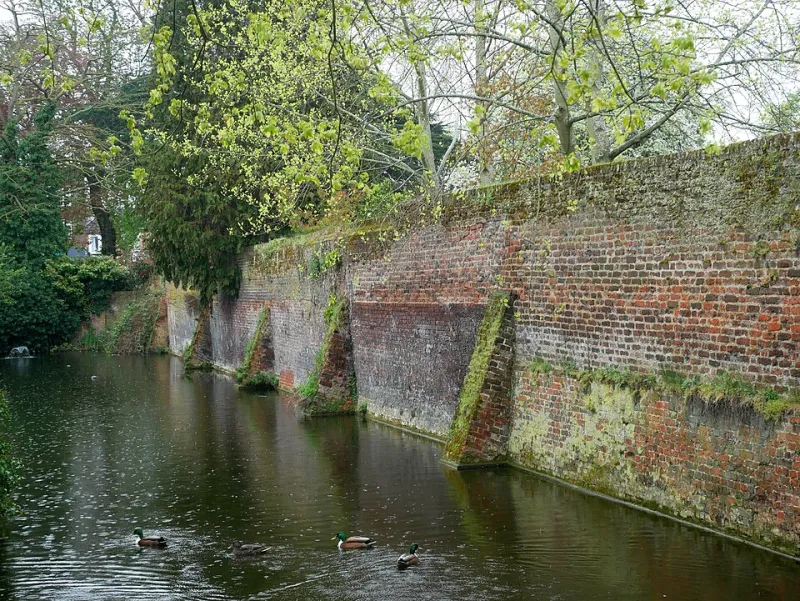
Photo: Marc Julien, CC BY-SA 4.0, via Wikimedia Commons
Your phone thinks it's helping you. Every time you snap a photo, its AI is quietly scrubbing away noise, flattening skin, and polishing surfaces until the image looks "perfect." But a growing number of photographers are asking a hard question: perfect for whom?
There's a reason your grandparents' old Kodachrome prints feel so alive. The grain, the slight color drift, the way a face looks genuinely present rather than rendered — those weren't bugs. They were the texture of a real moment. Today's smartphone cameras, armed with computational photography engines that process dozens of frames in milliseconds, have largely decided that texture is the enemy. And a lot of visual artists are pushing back hard.
What's Actually Happening Inside Your Phone
When you tap that shutter button, you're not really capturing a single photograph anymore. Devices like the latest iPhone and Pixel models are stacking multiple exposures, running noise reduction algorithms, applying machine-learning-based sharpening, and — especially on portraits — smoothing skin tones with tools that borrow heavily from beauty filter technology. The result is often technically impressive. Shadows are lifted. Highlights are recovered. Faces look clean and evenly lit.
But here's the thing: "clean" and "evenly lit" aren't the same as compelling.
Computational photography was designed to solve real problems — low light performance, dynamic range limitations, shaky hands. Those are genuinely useful fixes. The trouble starts when the same systems start making aesthetic decisions on your behalf. When an algorithm decides that the pores on someone's cheek are unwanted information, or that the natural graininess of a low-light scene should be replaced with a wax-smooth approximation, it's not just processing an image. It's editing the truth of it.
The Artists Who Are Done With "Flawless"
Walk through any serious photography portfolio online and you'll notice something: the images that stop you cold are rarely the technically perfect ones. They're the ones with a little grit. A blown highlight that creates mood. A face with real shadows and real lines.
Portrait photographer Dana Reyes, based out of Chicago, started shooting on a mirrorless camera specifically to escape her phone's processing habits. "I'd take a photo of someone and hand it to them, and they'd say 'oh, I look great' — but it didn't look like them," she says. "There was this plastic quality. The phone had decided to make them prettier, but in doing that it made them less real. Less interesting."
Reyes now shoots RAW on a dedicated camera and does her own post-processing, keeping intentional imperfections intact. She's not alone. Across Instagram and portfolio sites like Behance, a visible counter-movement has emerged — photographers deliberately preserving grain, embracing natural skin texture, and even adding analog-style noise back into images that started out too clean.
The Fine Line Between Helpful and Homogenizing
It's worth being fair to the engineers building these systems. Computational photography has made it genuinely possible for everyday people to capture moments they'd have completely missed with older technology. Night mode photos that would've been a blurry mess a decade ago now come out sharp and detailed. That matters.
But there's a difference between expanding what's possible and narrowing what's acceptable. When every phone from every manufacturer converges on the same aesthetic — bright, smooth, color-corrected to within an inch of its life — the visual landscape starts to feel weirdly uniform. Scroll through social media long enough and you'll notice it: everything looks like it was shot in the same studio under the same lights by the same invisible hand.
That homogeneity has real consequences for photographers trying to develop a distinctive visual voice. If your camera is making stylistic choices before you even open an editing app, you're not really authoring the image. You're approving it.
Fighting Back: Practical Ways to Reclaim Your Images
The good news is that you have more control than your phone's default settings suggest. Here are a few ways photographers are pushing back against the smoothness problem:
Shoot RAW when possible. Most flagship phones now offer a RAW or ProRAW format. It takes up more storage, but it gives you an unprocessed file to work with — no AI smoothing, no automatic skin retouching. You decide what stays and what goes.
Turn off portrait processing. Portrait mode is useful for background blur, but many phones apply skin smoothing automatically when they detect a face. On iPhones, you can dial back the "Portrait Lighting" intensity. On Android devices, check your camera settings for skin tone or beauty filters and shut them off.
Lean into grain intentionally. Apps like Grain by Moment or VSCO let you add film-style grain back into images that came out too clean. The difference between AI-generated smoothness and a deliberate grain overlay is enormous in terms of how a photo feels.
Embrace the unlit corners. Natural shadow and falloff are part of what makes a photograph feel like it was taken in the real world. Resist the urge to lift every shadow in editing. Dark areas create depth. They make the lit areas matter more.
What "Perfect" Is Actually Costing Us
There's a broader cultural conversation buried inside this technical one. When we train algorithms to remove imperfections from human faces, we're not just making photos look better — we're reinforcing a very specific and narrow idea of what a face is supposed to look like. Photographers working in documentary, portraiture, and street photography have long understood that the lines, the asymmetry, the evidence of a life lived are exactly what makes a face worth photographing.
The texture of an image is, in a very real sense, its honesty. Grain says: this was real light, really captured, in a real moment. Smoothness says: this is what we wish it looked like.
Neither is inherently wrong. But when one of those choices is being made for you, automatically, before you've had a chance to think about what you actually want the picture to say — that's when the technology stops serving the art and starts replacing it.
Your camera is a powerful tool. Just make sure you're still the one holding it.