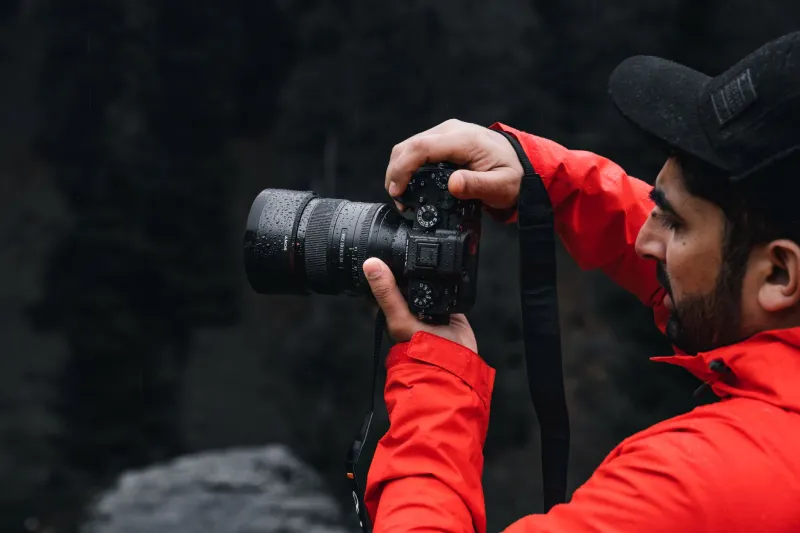
Chasing Perfect Is Killing Your Art: What Happens When You Finally Let Go
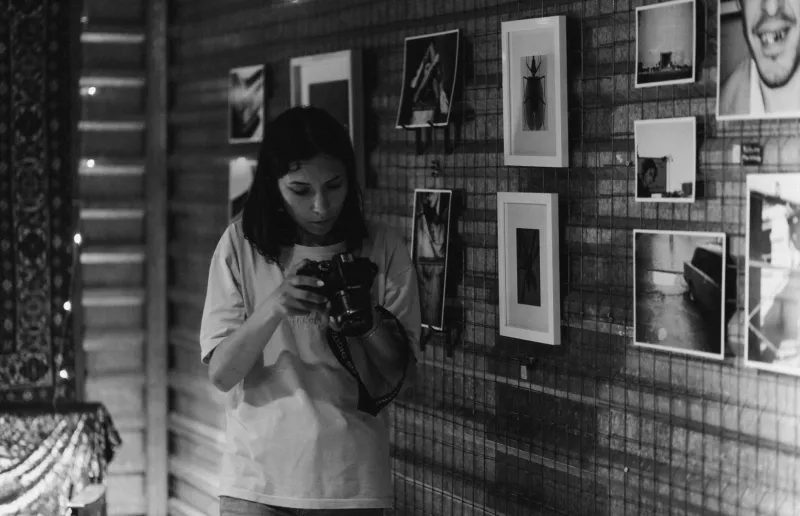
Somewhere between your first accidental great shot and your hundredth technically correct one, something weird happens. The work gets cleaner. Sharper. More composed. And somehow, weirdly, less interesting.
If you've been shooting for a few years — or painting, or designing, or making any kind of visual work — you probably know exactly what this feels like. You've learned the rules. You understand light. Your histograms look great. And yet there's this nagging feeling that the images you're producing are... fine. Competent. Safe. The kind of thing that gets polite compliments but doesn't make anyone stop scrolling.
Welcome to the perfectionism trap. It's more common than anyone talks about, and it might be the single biggest thing standing between you and the work you're actually capable of making.
The Competence Plateau Nobody Warns You About
There's a phase in every visual artist's development that feels like progress but is quietly functioning as a ceiling. You've internalized enough technique that mistakes feel like failures rather than accidents. You start pre-editing in your head before you even press the shutter. You pass on shots because the light isn't right, the framing's off, the moment's almost-but-not-quite what you envisioned.
The problem is that "almost-but-not-quite" is often exactly where the interesting stuff lives.
Photographer and educator David duChemin has written extensively about this tension — the gap between the image you planned and the image that actually happened. His argument, and it's a good one, is that the unplanned version is frequently the more honest one. The controlled shot shows what you know. The messy one shows what you feel.
Perfectionism, in this context, isn't a standard of quality. It's a defense mechanism. If you never finish anything, you never have to find out whether it's good. If you only show the technically pristine work, you never have to be vulnerable about the stuff that actually matters to you.
What "Giving Up" Actually Looks Like
Let's be clear: abandoning perfectionism doesn't mean getting sloppy. It doesn't mean posting blurry, underexposed garbage and calling it authentic. That's just a different kind of performance.
What it actually looks like is more subtle. It's the street photographer who stops waiting for the perfect light and starts shooting in whatever light exists. It's the portrait artist who keeps the frame where the subject's eyes drifted slightly off-camera because something in that off-ness tells the truth about the moment. It's the landscape photographer who includes the power lines because the power lines were there and pretending otherwise is a lie about the place.
Cindy Sherman built an entire career on images that were deliberately constructed and yet somehow deeply, uncomfortably real. Diane Arbus made pictures that violated almost every conventional rule of flattering portraiture and produced some of the most iconic American photography of the twentieth century. Neither of them were being careless. They were being ruthlessly honest — which is a completely different thing.
The Moment the Work Changed
Talk to working artists about when their practice shifted and you'll hear a version of the same story over and over. There was a period of technical mastery. Then a wall. Then something broke — a personal crisis, a creative deadline, a moment of exhaustion where they just didn't have the energy to be precious anymore — and on the other side of that break, the work got real.
One photographer based out of Nashville described it this way: she'd spent three years building a portrait portfolio she was genuinely proud of technically. Perfect exposure, beautiful catchlights, clean backgrounds. Clients loved it. She was bored out of her mind. Then, during a session where everything went sideways — wrong location, bad weather, subject who wouldn't cooperate with her poses — she just stopped directing and started documenting. The resulting images were the first ones she'd made in years that she actually wanted to hang on her own wall.
The shift wasn't about lowering standards. It was about changing what she was measuring.
Practical Ways to Break the Grip
If you're stuck in the perfectionism loop, the exit isn't about thinking your way out. It's about making enough work that the stakes per image drop to something manageable. Here are a few approaches that actually help:
Shoot with constraints. Give yourself a roll's worth of exposures — 36 shots — and don't let yourself delete anything during the session. The constraint forces commitment. You can't hover over every frame second-guessing yourself if there's a limit on how much time you can spend.
Make a bad photo on purpose. Deliberately violate a rule you care about. Blow the highlights. Chop off a head. Shoot into direct sun without any compensation. Then look at what happened. Sometimes the "wrong" version is just wrong. Sometimes it's the most alive thing you've made in months.
Separate the making from the judging. This is probably the most important one. The part of your brain that creates and the part that evaluates are in direct conflict when you try to run them simultaneously. Make a practice of shooting without reviewing — cover the LCD if you have to — and sit with the work for a day before you assess any of it.
Keep a folder of the discards. Before you delete anything, put it in a folder you don't look at for thirty days. Come back to it. You'll be surprised how often the image you were about to trash is the one that hits hardest at a distance.
The Work That Scares You Is Usually the Work That Matters
There's a reason the image you're most nervous to show anyone is often your strongest. It means something. It's specific. It's yours in a way that the technically perfect, aesthetically safe version never will be.
Perfectionism wants you to make work that can't be criticized. But work that can't be criticized is usually work that can't be felt, either. The two things are connected. Risk and resonance go together.
The best photographs — the ones that stick, the ones that travel, the ones that end up on walls and in books and in people's heads years later — are almost never the ones where everything went exactly according to plan. They're the ones where the photographer was present enough, and loose enough, and brave enough to let something real happen.
You already know how to make good pictures. The question is whether you're ready to make yours.