The Delete Button Lied to You: Rescuing the Photos You Were About to Throw Away
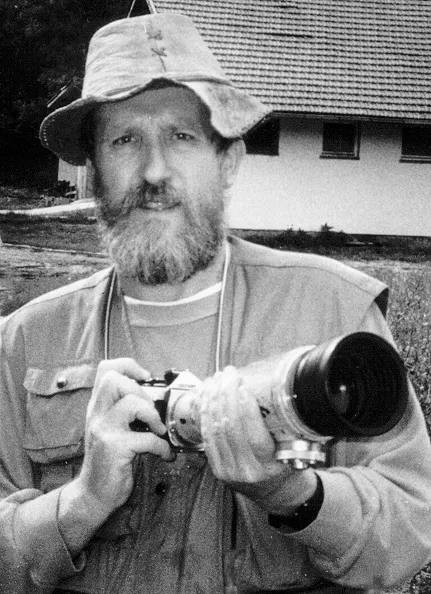
Photo: Geza Lennert, CC BY-SA 2.0, via Wikimedia Commons
There's a moment every photographer knows. You're scrolling through a fresh batch of images, coffee going cold beside you, and something in your gut says nope before your brain has even had a chance to weigh in. Click. Gone. Or at least, moved to the trash — which, let's be honest, most of us empty without a second look.
But what if that instinct is wrong? Not occasionally. Systematically, habitually, predictably wrong?
That's the uncomfortable question sitting at the center of what some photographers are calling the snapshot paradox: the strange phenomenon where the images we almost delete turn out to be the ones that hit hardest with everyone else.
Why We Reject What We Don't Recognize
Here's the thing about shooting — you're always inside the experience. You know the light was difficult. You know you were rushing. You know the frame was slightly off from what you had in your head. All of that context rides along with you when you review your shots, and it colors everything you see.
Viewers don't carry any of that baggage. They just see the picture.
Landscape photographer Dana Reyes, based out of New Mexico, describes finding a shot of a dust storm rolling across the desert three years after she took it. "I had marked it as a reject because the horizon wasn't level and I thought the exposure was muddy," she says. "I was cleaning out old hard drives and almost deleted the whole folder. When I actually looked at it again, I couldn't believe I'd missed it. The muddiness was atmosphere. The tilted horizon made it feel like the world was ending. It ended up being the centerpiece of a gallery show."
That gap — between what the photographer sees and what the viewer feels — is where some of the most compelling images live.
The Technical Trap
A lot of photographers, especially those who've spent time learning the craft seriously, fall into what might be called the technical trap. You've trained yourself to evaluate sharpness, exposure, composition, color balance. Those are real and useful skills. But they can become a filter that screens out emotional resonance in favor of technical correctness.
Portrait photographer Marcus Webb, who shoots editorial work out of Atlanta, puts it bluntly: "The photos I delete fastest are usually the ones where something went 'wrong.' But wrong and interesting are not the same thing. I've had to actively retrain myself to pause before I cull anything that makes me uncomfortable."
Uncomfortable is actually a useful signal. If a photo makes you squirm a little — because it's too raw, too messy, too honest — that discomfort is worth investigating before you trash the file.
The 48-Hour Rule
Several working photographers have independently landed on some version of the same practice: don't make final deletion decisions immediately after a shoot.
The reasoning is straightforward. Right after you shoot, you're still emotionally inside the session. Your expectations for what the images should look like are loudest in your head. Give it 48 hours, and you start to see the pictures more the way a stranger would.
"I used to cull the same night," says travel photographer Jess Holloway, who documents American roadside culture from her base in Nashville. "Now I won't touch a folder for at least two days. The images I thought were throwaways on night one are almost never the ones I end up deleting after I come back fresh. It's kind of humbling, honestly."
If 48 hours feels like too much of a workflow disruption, even a single night's sleep creates meaningful distance. The point is just to break the feedback loop between your in-the-moment frustration and your archive decisions.
What Viewers Actually Respond To
Studies on visual attention — and a whole lot of anecdotal evidence from photographers who've posted work online — suggest that what makes an image stick with people is rarely technical perfection. It's usually something harder to name: tension, authenticity, a sense that something real was caught rather than constructed.
A slightly soft focus on a face can read as intimacy. An unexpected shadow can create mystery. A composition that breaks the rules can feel urgent and alive in a way that a perfectly balanced frame sometimes doesn't.
This doesn't mean technical skill doesn't matter — it absolutely does. But it does mean that the standards we apply when we're culling our own work tend to weight technical criteria too heavily, and emotional impact not nearly enough.
Building a "Second Look" Archive
One practical shift that a lot of photographers swear by: instead of a binary keep-or-delete system, add a third category. Call it "second look," "maybe," or whatever label works for you. Images that trigger your instinct to reject, but that you can't immediately articulate why, go in there instead of the trash.
Revisit that folder every few months. You'll be surprised how many times your perspective has shifted.
Marcus Webb keeps a folder he calls "Uncomfortable" on every project drive. "Some of those photos have been sitting there for years," he says. "And every time I go back, I pull something out that I can't believe I almost lost. It's become one of my favorite parts of the process, honestly. Like finding money in an old coat pocket."
Learning to Sit With the Uneasy Ones
Ultimately, rescuing your best almost-deleted photos is about developing a tolerance for images that don't immediately feel like winners. That's easier said than done, especially if you've built up strong instincts through years of practice.
But those instincts were trained on a specific idea of what a good photo looks like. And that idea might be narrower than it needs to be.
The pictures that resonate — really resonate, the kind that people save and share and come back to — are often the ones that feel a little unfinished, a little exposed, a little too close to something true. Those are exactly the images that your delete-button instinct is most likely to flag.
So the next time your finger hovers over that trash icon, try asking yourself one question before you commit: Am I deleting this because it's actually bad, or because it makes me feel something I wasn't expecting?
The answer might save your best picture yet.