Nobody Knows Their Names: The Strange Afterlife of America's Orphaned Photo Albums

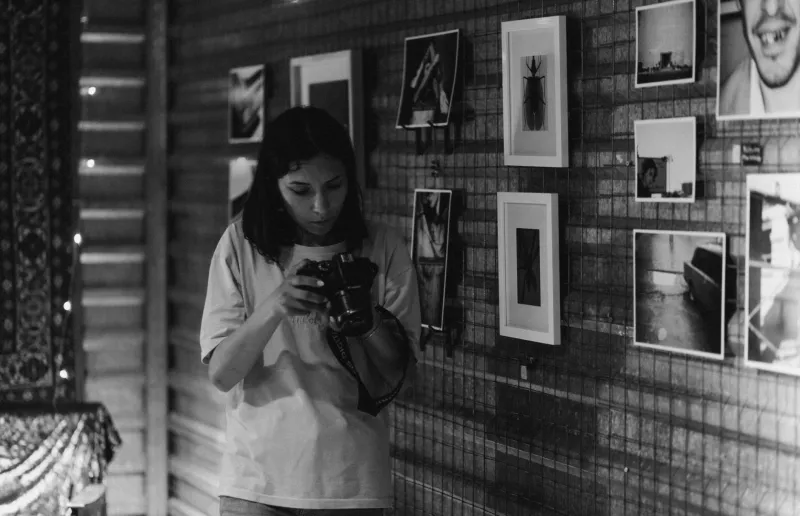
Photo by Photo by Tuva Mathilde Løland on Unsplash on Unsplash
There's a particular kind of box you find at estate sales in the Midwest — the kind with a rubber band around it, priced at four dollars, filled with somebody's entire visual life. Slides in yellowing sleeves. A photo album with a broken spine. A dozen prints of a family standing next to a car that hasn't existed since the Carter administration.
Someone's grandmother is in there. Nobody in the room knows her name.
These are what collectors call orphaned photographs: images that have lost their people. They turn up in flea markets, antique malls, eBay lots, and the backs of closets after a death. And in the last few years, a loose network of collectors, artists, and amateur archivists has built an entire culture around rescuing them.
Why anyone would care about a stranger's snapshots
The easy answer is nostalgia. The better answer is that snapshot photography is one of the most complete records of ordinary American life ever made, and most of it is being thrown away.
Think about what's in those boxes. Not weddings and graduations — those got framed and survived. The boxes hold the in-between stuff: birthday cakes on Formica tables, backyards before the patio, the car in the driveway, somebody squinting into the sun at a picnic table in 1974. Institutional archives collect the notable. Nobody was ever assigned to collect the boring, and the boring is where the history lives.
Collectors talk about the shift in how they look at pictures. After a few hundred anonymous strangers, you stop evaluating images for technique and start reading them for evidence. What was on the kitchen counter. What people wore to the beach. How children were allowed to stand in the back of a pickup truck, unsupervised, grinning.
The ethics get thorny fast
Here's where the warm feelings stop. A found photograph is a document of someone's private life, made without any expectation that a stranger would one day post it on the internet with a clever caption.
Most serious collectors land on a few informal rules. Don't invent biographical details for the people in the frame. Don't dress up a real person's image with a made-up backstory just because it's a better story. Be careful with nudity and with children. And when you display or publish a found image, credit it as unknown and describe it only as what it plainly is: a snapshot of unidentified people, found at a sale in a particular place.
There's also the matter of the caption. The temptation to write "Margaret, 1968, unhappy in love" over a picture of a woman frowning at a barbecue is enormous. It's also fiction. The best captioning practice is almost boringly honest: "Undated snapshot, found in Ohio, 2019." The mystery is the point. You don't have to solve it to respect it.
The reunion projects
Some collectors go a step further and try to give the pictures back. It's an oddly moving corner of the hobby — people who buy a box of slides for six dollars and then spend eighteen months trying to find a granddaughter.
The methods are low-tech and persistent. Read the back of every print. Look for house numbers, street signs, school names, church programs, license plates. Post pages to local Facebook groups and county historical societies. Search obituaries for names that match the ones scrawled in the margins. Contact the funeral home listed on a memorial card tucked in the album.
The success rate isn't high, but it's not zero, and when it works, the reaction is usually the same: a long pause, then a story about how the box got lost in a move or a divorce or a storage unit that got cleared out. The photographs come home to people who thought they were gone, and the collector gets a thank-you note and the satisfaction of returning something that was never theirs.
What orphaned albums say about American visual culture
Spend a weekend with estate-sale albums and you notice patterns. Everyone posed in front of a car. Everyone has a photo of a birthday cake shaped like an animal. Always a shot of somebody standing on a lawn beside a house, squinting, arms at their sides, not quite sure where to look.
Kodak built a whole industry around teaching people to photograph the milestones, and then people used those cameras to photograph their kitchens. That gap — between the marketing and the actual output — is the most interesting thing in the box. The snapshots weren't made to be beautiful. They were made to prove something happened, and that someone was there to see it.
Which raises an uncomfortable question for the rest of us. Our photographs are, in many ways, more likely to be orphaned than the ones in that box. A shoe box of prints survives a flooded basement, a laptop wipe, a company going under. A cloud library survives a house fire but not a subscription lapse.
How to keep your own archive out of the flea market
Nobody thinks their family photos will end up priced at four dollars next to a chipped lamp. Then it happens, because the person who knew who everyone was died, and nobody else wrote anything down.
So do the boring work while you still can. Scan the prints at a high resolution and keep two copies off-site. Label the back of physical photos in pencil — full names, approximate dates, the town. Sit down with the oldest person in your family and get them to identify people while they can. Write one paragraph per album explaining whose it was and why it mattered.
And if you inherit a box of pictures from someone else's family, think before you toss it. Ask the local historical society. Post a scan. Somebody out there might be looking.
The mystery in those albums isn't a flaw to fix. It's an invitation — a reminder that most of the pictures ever taken in this country were of ordinary people who didn't think they were making history. They were right. And it's still the best record we've got.