Beautiful Ruins: Inside the World of Photographers Who Shoot America's Forgotten Places
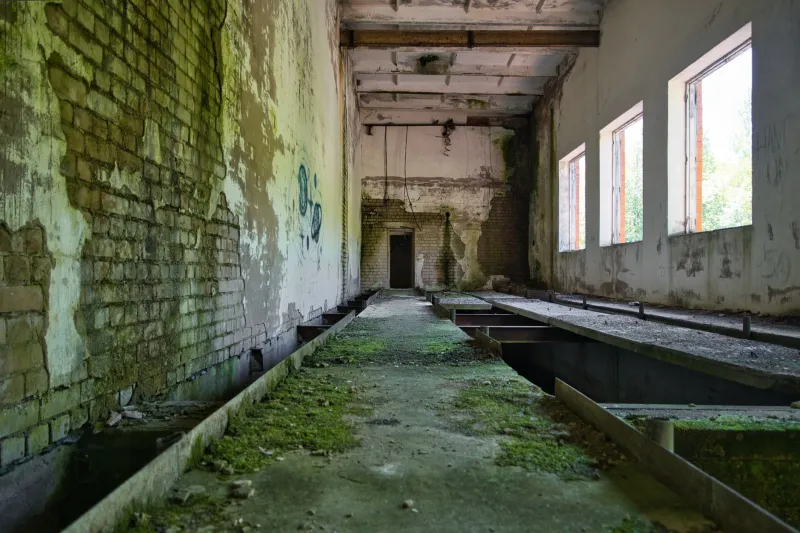
Cracked tiles. Collapsed ceilings. Hallways where no one has walked in decades. Urban exploration photographers venture into the spaces America left behind — and what they bring back is some of the most haunting, honest imagery being made today.
There's a whole visual universe hiding inside the places we've stopped looking at. Shuttered factories in Detroit. Vacant sanatoriums in upstate New York. Overgrown theme parks in rural Virginia. To most people, these are eyesores or hazards — places to be demolished or forgotten entirely. To a dedicated community of artists known as urban explorers, or "urbex" photographers, they're something else entirely: archives. Cathedrals of a kind. Evidence.
How a Subculture Became a Movement
Urban exploration has been around in some form for as long as cities have had ruins. But the modern photographic incarnation of it really took shape in the late 1990s and early 2000s, when digital cameras became accessible and early internet forums gave explorers a place to share what they were finding. What started as a niche hobby among adventurous shutterbugs and history buffs has grown into something that's genuinely influencing fine art, interior design, and architectural photography.
The aesthetic — peeling paint, nature reclaiming interiors, light cutting through broken windows — has seeped into mainstream culture so thoroughly that you'll find it referenced in everything from fashion editorials to video game environments. But the photographers who actually do the work will tell you the images only make sense in context. Without the story behind the space, it's just decay porn.
"People see a photo of a crumbling theater and think it's beautiful, which it is," says Marcus Webb, a Philadelphia-based urbex photographer who has been documenting abandoned industrial sites along the East Coast for nearly a decade. "But what I want them to feel is the weight of it. This was someone's workplace. Someone's community. The beauty is inseparable from the loss."
Reading the Ruins: What Abandoned Spaces Actually Say
The United States has an unusual abundance of abandonment. Deindustrialization hollowed out manufacturing cities across the Midwest and Northeast. The decline of regional hospitals left behind enormous Victorian-era buildings with no new purpose. Rural depopulation emptied out small towns, schools, and churches across the Great Plains. Each of these spaces tells a specific American story — about economic shifts, about which communities got investment and which didn't, about what we build and what we eventually walk away from.
Urban exploration photographers at their best function as a kind of visual journalism. They're documenting places that official history has stopped paying attention to. A collapsed gymnasium in an abandoned school carries information about a neighborhood's past that no press release will ever capture. The graffiti on the walls, the personal belongings left behind, the way a particular kind of mold has colonized the ceiling tiles — it all adds up to a portrait of a place that was once alive.
Photographer Lena Castillo, who focuses on abandoned healthcare facilities in the rural South, describes her work as "archaeological." "I'm not there to get a dramatic shot," she says. "I'm there to witness. The camera is how I take notes."
The Ethics Nobody Wants to Talk About (But Should)
It would be dishonest to write about urbex photography without getting into the legal and ethical complexity that surrounds it. Most abandoned buildings are private property. Entering them without permission is technically trespassing, which means that a significant portion of urban exploration photography is produced through illegal access. That's not a minor footnote.
The community itself is divided on this. Some photographers work exclusively with property owners to gain legal access, treating it like any other location shoot. Others operate in a grayer zone, arguing that photographing a place does no harm and that the documentation serves a public historical interest. A smaller subset treats trespassing as part of the ethos — the inaccessibility is part of the point.
Most serious urbex photographers subscribe to a code that's sometimes summarized as "take nothing but photographs, leave nothing but footprints." The idea is that the explorer's presence should be invisible — no vandalism, no disturbing artifacts, no sharing precise locations publicly in ways that might invite less careful visitors. Whether or not that ethical framework fully addresses the trespassing question is something the community continues to debate.
For photographers interested in exploring this aesthetic without the legal exposure, there are legitimate paths in. Many historic preservation organizations partner with photographers to document endangered buildings. State and local historical societies sometimes offer access to structures slated for demolition. And plenty of genuinely compelling abandoned spaces — roadside structures, rural farmsteads, industrial sites — sit on public land or in areas where access isn't restricted.
The Gear, the Light, and the Patience
From a purely technical standpoint, shooting in abandoned spaces is demanding in ways that test every aspect of a photographer's skill set. Lighting is almost always challenging — a mix of harsh direct light from broken windows and deep shadow everywhere else. Floors and ceilings may be structurally compromised, limiting where you can safely set up a tripod. Dust, mold, and debris are constant concerns for both equipment and health.
Most urbex photographers shoot wide, using lenses in the 16–35mm range to capture the full scale of a space. Long exposures are common, both for managing difficult light and for creating the slightly otherworldly quality that characterizes a lot of the best work in this genre. Post-processing tends toward restraint among photographers who take the documentary aspect seriously — heavy HDR editing and oversaturated toning, once hallmarks of the style, have largely fallen out of favor among the more artistically serious practitioners.
"The spaces do most of the work," Marcus Webb says. "If you feel like you need to add a lot in post, you probably weren't in the right spot when you pressed the shutter."
From Underground to the Gallery Wall
What's striking about where urbex photography has landed culturally is how far it's traveled from its DIY origins. Work by photographers in this space has appeared in galleries, been collected by museums, and influenced a generation of commercial photographers and set designers. The aesthetic has become a recognizable visual language — one that communicates something specific about impermanence, memory, and the American tendency to build things and then simply stop caring about them.
That mainstreaming has its critics within the community, who worry that commercial interest dilutes the documentary intent. But it's also opened up a broader conversation about what these spaces mean and why they matter — a conversation that probably wouldn't be happening if the images had stayed on niche internet forums.
At its best, urban exploration photography does something that very little visual art manages: it makes you look carefully at something you've been trained to look away from. That's not a small thing. The ruins are out there. Someone should be witnessing them.